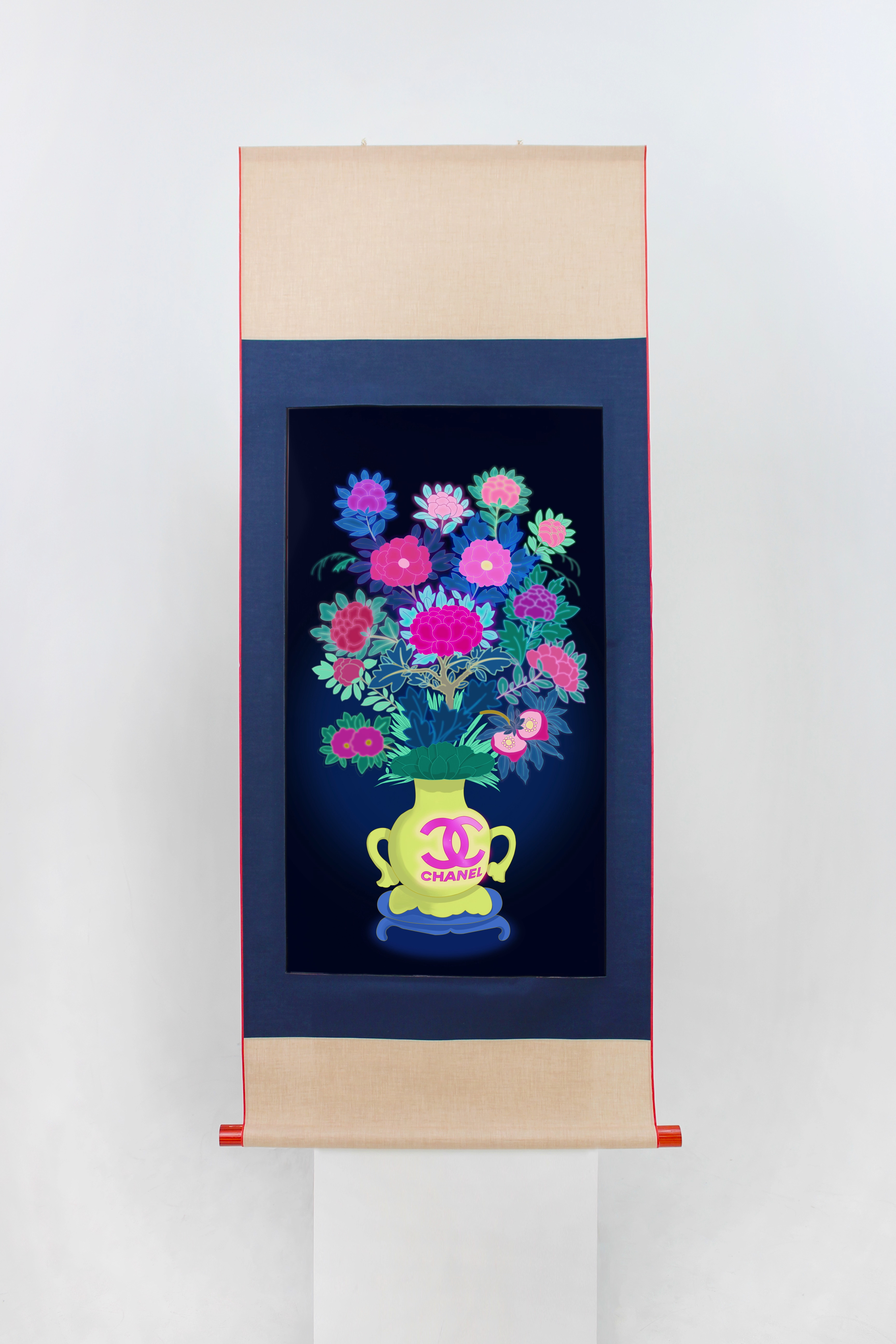
A moth drawn to the scent of peonies 모란의 향을 맡는 나방
During the reign of Queen Seondeok, the first queen of Korea, the Tang emperor Taizong presented her with a painting of peonies without butterflies. In East Asian visual tradition, peonies and butterflies are inseparable symbols of beauty and vitality. By omitting the butterflies, the gift functioned as an insult, implying that the unmarried queen was a “flower without fragrance.”
This work reclaims that narrative through the figure of a moth. Unlike butterflies, moths are guided by scent rather than appearance. The moth becomes a symbol of female power that recognizes true value beyond prejudice and surface judgment. By depicting a moth capable of sensing peonies, the work asserts an alternative form of perception rooted in intuition and resilience.
Referencing the legacy of Gabrielle Bonheur Chanel, whose work challenged social norms surrounding women, A moth drawn to the scent of peonies questions how women’s value has been defined across tradition, modernity, and Western influence, and encourages a shift in the way female power is perceived.
신라 최초의 여왕인 선덕여왕의 재위 시절, 당 태종은 나비가 없는 모란 그림을 선물했다. 동아시아 회화 전통에서 모란과 나비는 늘 함께 등장하는 상징으로, 생명력과 아름다움을 의미한다. 나비가 제거된 이 그림은 결혼하지 않은 여왕을 ‘향기 없는 꽃’에 비유한 모욕적인 메시지였다.
이 작업은 나비 대신 나방의 형상을 통해 그 서사를 전복한다. 나비가 시각에 의존한다면, 나방은 향을 따라 움직인다. 모란의 향을 감지하는 나방은 외형이나 사회적 편견을 넘어 진정한 가치를 인식하는 여성적 힘을 상징하며, 직관과 회복력을 바탕으로 한 또 다른 인식의 방식을 제시한다.
여성의 사회적 역할과 규범에 변화를 가져온 가브리엘 보네르 샤넬의 유산을 참조하며, 모란의 향을 맡는 나방은 전통과 근대, 그리고 서구적 가치 속에서 여성의 위상이 어떻게 정의되어 왔는지를 질문하고, 여성의 힘을 바라보는 인식의 전환을 제안한다.